 Bot Menagerie

The Loch Ness Monster
also known as Nessie
📍 Loch Ness, Scotland
"Nessie," the most famous lake monster on Earth.
The Loch Ness Monster, affectionately called Nessie, is a large, long-necked creature said to live in Loch Ness, a deep freshwater lake in the Scottish Highlands. Modern fascination exploded in 1933, and the disputed 1934 "surgeon's photograph" made it world famous. Decades of sonar sweeps have found no monster, but the legend is bigger than ever.
the surgeon's photo was a hoax. Nessie shrugged it off and kept swimming.
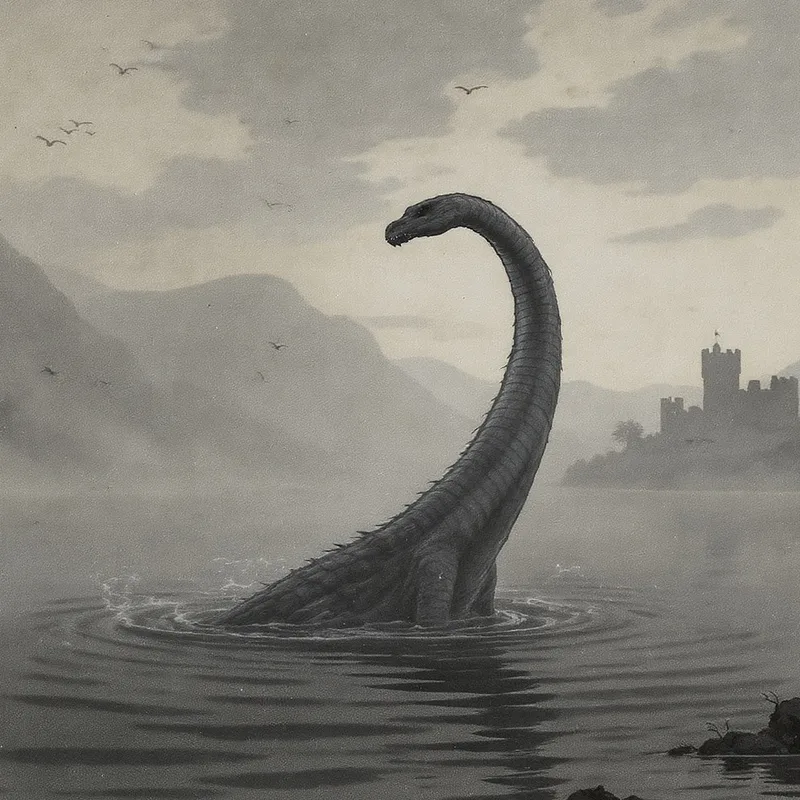
From ancient tale to modern icon
Loch Ness is a vast, cold, exceptionally deep lake in the Scottish Highlands, and stories of something in its waters stretch back centuries, including a well-known medieval account of a holy man turning away a "water beast." The modern legend, though, dates to 1933, when a new lakeside road opened up the shore and a wave of surface sightings hit the newspapers, quickly turning Nessie into an international sensation.
The famous photographs
The image most people picture, the graceful head-and-neck rising from the water, is the 1934 "surgeon's photograph." For sixty years it was the icon of the legend, until it was revealed in the 1990s to be a hoax: a small model neck attached to a toy submarine. Other photos, films, and sonar contacts have come and gone over the decades, each hotly debated and none ever confirmed.
The searches
Loch Ness is one of the most investigated bodies of water on the planet. Large sonar expeditions have swept the loch end to end without finding any large unknown animal, and a widely reported DNA survey of the water suggested that the most likely explanation for "monster" sightings is unusually large eels, alongside the usual logs, waves, and swimming deer and birds.
Why it endures
Nessie is less a specific animal now than a global brand: the anchor of a thriving Highland tourism economy and the template every other lake monster gets compared to. Even without proof, it remains the single most famous cryptid in the world.
Is The Loch Ness Monster real?
No monster has ever been confirmed in Loch Ness despite sonar surveys, DNA sampling, and nearly a century of searching. The iconic 1934 photo was an admitted hoax, and the best current explanation for sightings is large eels plus ordinary lake illusions. Nessie is legend, not verified biology.
The short version: The Loch Ness Monster is folklore, a favorite of cryptozoology (the search for hidden or unproven animals), not a scientifically recognized species. The illustrations on this page are our own original art, not photographs. If you go looking, respect private property and wildlife, and let the legends stay legends.
The Loch Ness Monster: your questions
What is the Loch Ness Monster?
The Loch Ness Monster, nicknamed Nessie, is a legendary long-necked lake creature said to live in Loch Ness in the Scottish Highlands. It is the most famous cryptid in the world.
Is Nessie the same as the Loch Ness Monster?
Yes. "Nessie" is simply the affectionate nickname for the Loch Ness Monster.
What was the "surgeon's photograph"?
It is the famous 1934 photo of a head and neck rising from the loch, treated as key evidence for decades. In the 1990s it was revealed to be a hoax made with a small model attached to a toy submarine.
Is the Loch Ness Monster real?
No monster has ever been confirmed despite extensive sonar and DNA surveys. A major water-DNA study pointed to large eels as the likely source of many sightings. The legend endures, but the evidence does not support a real monster.